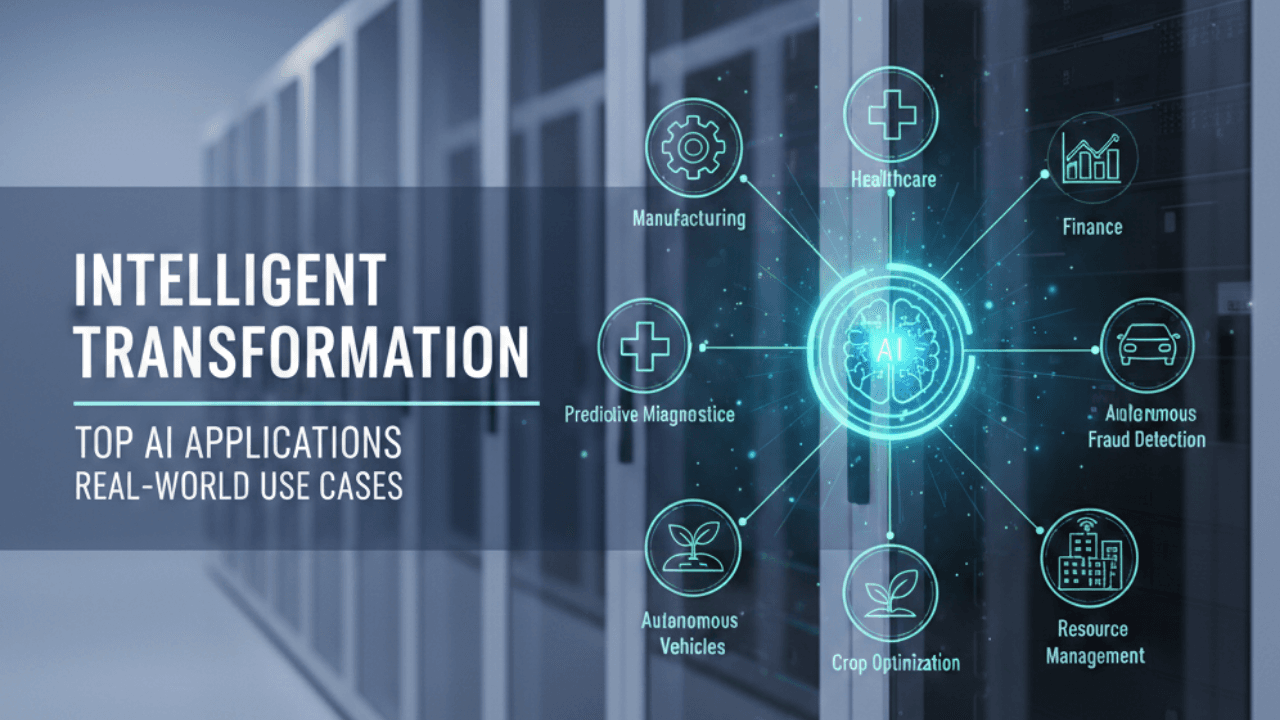

In recent years, artificial intelligence has made great progress.
What began as simple automation and rule-based systems has grown greatly in complexity. Businesses are now using AI to communicate with customers, create content, analyse data, and streamline processes.
However, a lot of companies are still in the early phases of implementing AI. They're focusing on chatbots.
Chatbots have emerged as the face of artificial intelligence in many businesses. Conversational AI is being used in a wide range of applications, including customer service and commerce. It seems like we're making progress. It appears to be modern. It sends the message that the company is "AI-driven."
But here's the fact that few people talk about. Chatbots do not represent the future of enterprise automation. They're just the beginning.
The true transition is toward something considerably more powerful: agentic AI. Companies that comprehend this trend early will have a significant advantage.
The Problem with How Businesses Are Using AI Today
Most organisations now use AI in a very limited capacity. They view it as a tool for engagement rather than a system of execution. This is why so many corporations are investing in:
- Customer service chatbots
- AI-generated replies.
- Basic automation tools.
- Conversational interfaces
These solutions are useful, but just on the surface. They prioritise communication over action.
A chatbot can respond to questions. However, it frequently does not address the problem fully.
If a customer enquires about a refund, a chatbot may provide information. However, the actual process of checking eligibility, executing the refund, and updating systems still involves human intervention or many steps.
This generates friction. Customers demand resolution, not simply responses. Businesses require outcomes, not simply chats. And this is precisely where traditional AI falls short.
What Is Agentic AI?
Agentic AI is the next stage of artificial intelligence. Agentic AI systems can do more than just respond to inputs. They:
- Understand goals.
- Make decisions.
- Take action.
- Execute tasks across systems.
To put it simply, Agentic AI does more than just talk; it also acts. It behaves more like a digital actor than a passive tool.
Consider the difference this way:
- A chatbot instructs you on what to do.
- An artificial intelligence agent does it for you.
This alteration may appear modest, yet it has far-reaching consequences.
From Chatbots to AI Agents: A Fundamental Shift
| Capability | Chatbots | Agentic AI |
|---|---|---|
| Interaction | Conversational | Goal-driven |
| Function | Answers queries | Executes tasks |
| Intelligence | Reactive | Proactive |
| Integration | Limited | Deep system integration |
| Outcome | Information | Action |
| Value | Surface-level | Operational transformation |
Why Chatbots Alone Are Not Enough
Chatbots became popular because they addressed one of the most obvious challenges in business: client communication. They allowed for speedy responses, large-scale management of recurring questions, and 24-hour support. Many firms recognised this as a huge improvement over previous support systems, which relied heavily on human intervention. However, while chatbots improved business communication, they did not significantly change the way work is done.
When you look beyond the contact, the limit becomes obvious. Chatbots typically rely heavily on backend technology that was not built for automation. They can answer questions, but if a situation becomes too intricate, they frequently must refer it to a human representative. They have trouble with multi-step tasks, system coordination, and context-based decision-making. As a result, they can help customers, but they rarely address problems from start to finish.
This is why many chatbot implementations become incomplete over time. They give the impression of automation, but not the reality of it. Customers may receive prompt responses, yet they still face delays in actual resolution. Businesses may cut workload, but not eliminate it. Finally, while chatbots improve discussions, they fall short of providing actual operational efficiency—which highlights the need for a more advanced approach, such as Agentic AI.

What Makes Agentic AI Different
Agentic AI is intended to offer beyond interaction. It focuses on outcomes. Instead of simply replying to a request, it recognises the purpose behind it and takes the required steps to fulfil it.
For example: If a user wishes to cancel a subscription, an AI agent may:
- Verify account information.
- Check the subscription status.
- Process the cancellation.
- Update internal systems.
- Send a confirmation.
All without human interference. This amount of automation is exactly what businesses need.
Real-World Workflow Comparison
| Task | Chatbot Approach | Agentic AI Approach |
|---|---|---|
| Customer refund request | Provides refund policy | Processes refund end-to-end |
| Lead inquiry | Shares information | Qualifies and assigns lead |
| Appointment booking | Suggests available slots | Books and confirms automatically |
| Complaint handling | Logs complaint | Resolves and updates systems |
| Data request | Provides data summary | Fetches, analyzes, and delivers insights |
How Codezilla Approaches Agentic AI
At Codezilla, the goal is not just to build AI, but to create intelligent systems that really operate. This means:
- Understanding business workflows deeply.
- Identifying places where automation has a real impact.
- Creating AI bots that integrate across systems.
- Ensure scalability and reliability.
Instead of developing chatbots that simply answer, the idea is to create systems that act, execute, and achieve results.
The Transition from Tools to Systems
| Stage | AI Usage |
|---|---|
| Early Stage | Basic automation tools |
| Intermediate | Chatbots and assistants |
| Advanced | Agentic AI systems |
| Future | Autonomous enterprise systems |
The Bottom Line
Chatbots helped organisations enhance communication, accessibility, and basic automation, bringing in the era of AI adoption. However, they are simply the initial step, not the end goal. As business requirements change, the emphasis is shifting toward systems that can think, determine, and act autonomously. Here's where Agentic AI comes in. It goes beyond chats and produces tangible results. Because, in the end, businesses require AI that not only speaks but also acts.