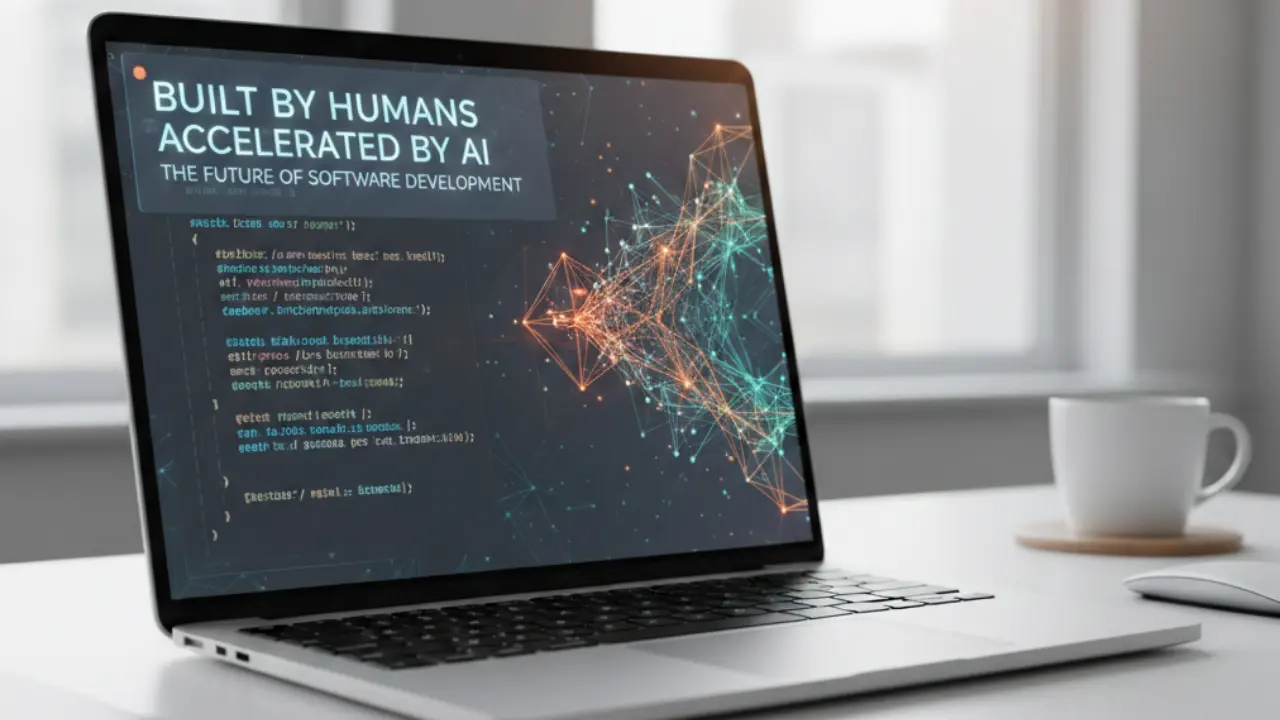

The future of software development is no longer about a simple rivalry between humans and machines; it's about collaboration, evolution, and reimagined roles. As Artificial Intelligence (AI) continues to grow sharper, faster, and more capable of handling complex tasks, many people have asked a pressing question: Will AI eventually replace developers? The truth doesn’t lie in dramatic predictions or vague futurism, it lies in understanding the real transformation happening in the workplace and what it means for developers (and the future of work) by 2030.
In this article, we’ll go beyond the surface of headlines and explore the nuanced reality of how AI is reshaping development careers, how developers can adapt to thrive, and why humans will remain central to innovation even in an increasingly automated world.
Why This Question Matters: The Real Impact of AI on Developers
The conversation around AI replacing developers isn’t theoretical, it's happening now. Industry leaders and research reports have shared powerful insights:
Some experts predict AI could significantly automate coding and software creation. Yet others emphasize that AI will enhance human capability rather than eliminate it.
Companies like Walmart continue to hire software engineers even as they build AI agents to automate workflows, underscoring the ongoing demand for human expertise.
The rise of AI assistants is reshaping roles, but humans still make strategic decisions about requirements, architecture, ethics, and broader business impact.
What’s clear is this: the future of work isn’t a battle between developers and AI, it's a transition toward collaboration.
Section 1: What AI Can and Can’t Do in Development
The Strengths of AI in Coding
AI has made remarkable strides in software development. Modern tools can:
Generate boilerplate code and scaffolding- AI can rapidly produce repetitive templates, saving developers time.
Suggest intelligent completions or fixes- tools like GitHub Copilot and other generative models provide contextual suggestions while coding.
Create test cases and documentation- AI can automatically generate tests, documentation drafts, and integration pieces to speed workflows.
Analyze code for patterns or performance issues- machine learning models can identify common bugs or performance bottlenecks faster than traditional manual reviews.
These capabilities are not just doubling productivity in some enterprises, a significant portion of code is now being written or assisted by AI.
But AI Still Has Limitations
Lack of true contextual understanding – AI may generate code that looks correct but doesn’t align with business logic or user intent.
Missing strategic judgment – decisions around architecture, ethical trade-offs, long-term planning, and team coordination require human insight.
Difficulties with large, complex systems – AI struggles with extremely large codebases, especially where team conventions and system context are important.
Ethical and legal accountability – machines can’t be held responsible, and humans must still oversee quality, security, and compliance.
In short, AI is powerful but it’s not an autonomous software architect. That means developers retain essential influence over complex and meaningful work.
.png "Built-by-Humans-1 (1)")
Section 2: Will AI Replace Developers by 2030? A Balanced Reality Check
The short answer? No, AI will not replace developers entirely by 2030. But the nature of the job will change drastically.
What Will Likely Change
AI to handle a majority of repetitive, rule-based coding tasks. Tools may write large chunks of code that previously took weeks.
Developers spend more time steering AI designing prompts, supervising outputs, and focusing on higher-order thinking.
Roles to shift toward strategy, systems design, cross-disciplinary collaboration, and problem framing.
Developers act as AI managers auditing results, tuning models, and embedding them into business solutions.
In this light, AI doesn’t replace developers, it redefines what being a developer means.
What Will Stay Human-Driven
Critical thinking and creativity- generating novel solutions, anticipating future constraints, and innovating beyond data patterns.
Ethical reasoning- weighing trade-offs, considering social impacts, ensuring fairness and safety.
Communication and empathy- collaborating with teams, translating technical language into business goals.
Accountability and leadership- guiding AI projects and ensuring alignment with organizational values.
These are not tasks machines can handle on their own at least not in ways that deliver meaningful outcomes humans trust.
Emerging Roles and Opportunities in the AI-Driven Future
The fusion of AI into development workflows is already creating brand-new job categories that didn’t exist a few years ago. By 2030, many of these could be dominant career paths:
AI Model Trainer / Fine-Tuner
Specialists who refine AI systems for specific organizational needs choosing training data, setting evaluation criteria, and ensuring sensitivity to context.
Prompt Engineer
Professionals who design prompts and workflows that guide AI models toward accurate, reliable results blending technical and linguistic skills.
AI Code Validator / Safety Reviewer
Developers focused on reviewing AI-generated code for security, compliance, performance, and maintainability.
Hybrid Technical Roles
From AI-Ops engineers to ethical tech strategists, new hybrid disciplines will demand both software and socio-technical insight.
These roles emphasize human judgment and foresight, which remain beyond the scope of today’s AI capabilities.
The Future Developer Skill Set What You Need to Succeed
If AI is transforming development then the developers who thrive will be the ones who adapt first. Here’s how:
Embrace AI as a Partner
Rather than resisting AI, forward-thinking developers will learn to collaborate with it. Treat AI tools as productivity amplifiers, not threats.
This means:
Learning to write effective prompts.
Integrating AI into testing, debugging, and code review workflows.
Using AI feedback to accelerate learning and experimentation.
The developers who master this collaboration will be more valuable, not less.
Cultivate Higher-Order Technical Skills
Beyond syntax and code implementation, the future demands expertise in:
Architecture and system design- thinking about scalability and interaction patterns.
Distributed systems- building resilient, secure infrastructure.
AI ethics and governance- evaluating models for fairness, privacy, and bias.
Soft skills and leadership- contextualizing tech for organizational impact.
The more you can think beyond code, the more indispensable you become.
Lifelong Learning is Non-Negotiable
Tech evolves faster than ever, especially in AI. Developers who stay relevant by regularly upskilling will outperform those who don’t.
This could include:
AI and ML fundamentals.
Prompt engineering best practices.
System security and compliance.
Cross-domain knowledge like product strategy or UX design.
Staying curious isn’t optional, it's career insurance.
The Broader Impact on the Future of Work
AI’s influence extends beyond coding teams; it's transforming the entire landscape of how, where, and why we work.
Productivity Redefined
AI is making routine tasks faster, more accurate, and more accessible allowing teams to innovate at unprecedented speed. This changes how organizations plan roadmaps and build products.
The Human-AI Partnership
Rather than replacing humans, AI is embedding itself into workflows that require both cognitive capacity and human judgment from healthcare diagnostics to regulatory compliance systems. In India and worldwide, leaders emphasize that humans and AI will co-create and co-work, not replace one another.
Workforce Shifts Across Industries
While repetitive jobs are at risk across many sectors, workers in dynamic, adaptive roles developers included are poised for growth and influence.
According to multiple employment trend reports, demand for developers and AI specialists continues to expand rather than contract.
Conclusion: Developers and AI - Not Opponents, But Architects of the Future
By 2030, the landscape of work will look dramatically different but not in the way many fear.
AI will not replace developers; it will amplify them. The future belongs to those who can:
Combine human intuition and creativity with AI’s computational power.
See big architectural problems instead of just lines of code.
Maintain ethical standards and strategic alignment in every project.
Adapt continuously to new tools, methodologies, and expectations.
AI doesn’t diminish human value, it raises the bar. So if you’re a developer, engineer, or tech professional wondering where you fit into tomorrow’s world, here’s the honest takeaway:
Your career is not disappearing, it's transforming.
AI isn’t your replacement, it's your co-creator, your assistant, and your accelerator. The question isn’t whether developers will still exist by 2030, it's whether they will lead boldly, adapt swiftly, and build responsibly.
And that future, without question, will be built by humans and machines working together.